The Discipline of Less: How Intentional Collectors Are Redefining American Luxury Through Absence
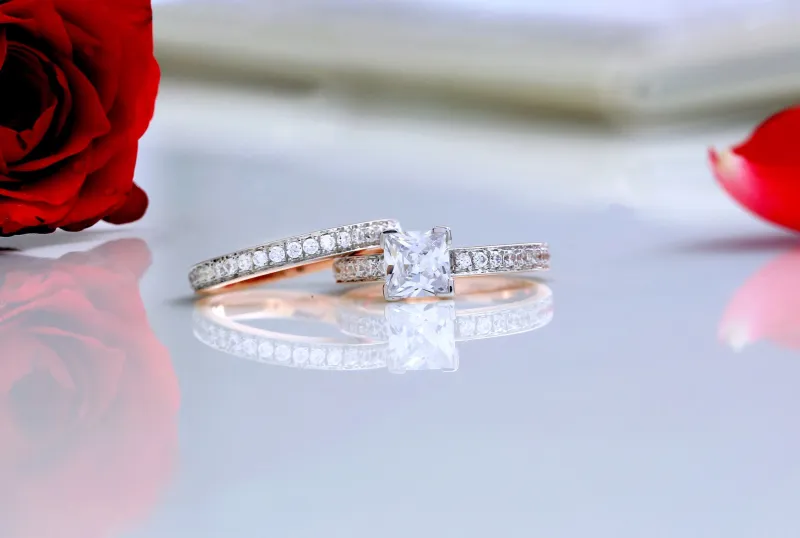
There is a particular kind of freedom that arrives only after you have stopped wanting everything. It is not poverty of desire. It is something far more refined—a cultivated clarity about what truly belongs in your life and what merely occupies space within it. For a growing number of American fine jewelry collectors, this clarity has become the defining characteristic of a sophisticated collection. And the philosophy that has given their restraint a name is one borrowed from Japanese aesthetic tradition: ma.
Translated imprecisely as "negative space" or "interval," ma is not the absence of something. It is the presence of intentional pause—the breath between notes that makes music meaningful rather than mere noise. In architecture, it is the empty room that invites contemplation. In jewelry, it is the unoccupied finger, the bare wrist, the collarbone that wears nothing at all. It is, paradoxically, the most powerful statement a collector can make.
The Accumulation Trap
American consumer culture has long equated abundance with success. Jewelry, in particular, has been subject to this logic—the notion that a complete collection must fill every occasion, every neckline, every mood. Department store trays, seasonal sales, and the inexhaustible scroll of online marketplaces have made acquisition effortless and, in doing so, have made it meaningless.
The collectors who are now stepping back from this model are not doing so out of austerity. Many have the resources to acquire without restraint. What they have discovered, often through years of accumulation, is that a drawer full of pieces worn rarely—if ever—represents not wealth but distraction. Each piece competes for attention. Each acquisition dilutes the significance of the last. The collection grows, but its meaning contracts.
This is the accumulation trap: the pursuit of completion that guarantees incompleteness, because there is always one more piece to justify, one more occasion to anticipate, one more variation on a theme already overstated.
What Ma Teaches the American Collector
The Japanese concept of ma offers a corrective that is both aesthetic and psychological. When applied to collecting, it suggests that the spaces between pieces are as important as the pieces themselves. A single, extraordinary ring worn on a bare hand communicates with a precision that ten rings cannot achieve together. The eye has nowhere else to go. The craftsmanship receives the attention it was made to command.
At Anelli Nagaoka, this philosophy is not decorative—it is foundational. The fusion of Japanese precision and Italian design sensibility that defines our approach is, at its core, a study in meaningful selection. Italian design has always understood the power of the singular gesture: the perfectly cut coat, the one accessory that transforms rather than accumulates. Japanese craft tradition understands that mastery is demonstrated through what is omitted as much as what is expressed. Together, these traditions produce an aesthetic framework that makes restraint feel not like deprivation, but like arrival.
The Psychology of the Deliberate Pause
There is genuine psychological research supporting what experienced collectors have long intuited. The hedonic adaptation principle—the human tendency to normalize new acquisitions rapidly—means that the satisfaction derived from a new piece diminishes sharply within weeks of purchase. Collectors who acquire frequently find themselves in a cycle of brief pleasure followed by renewed longing. The collection never feels finished because the emotional reward has already faded.
Contrast this with the relationship a collector develops with a piece chosen slowly and worn with genuine intention. When a ring carries the memory of the conversation that preceded its selection, the trip made to examine it in natural light, the deliberation that stretched across months rather than minutes, it becomes something other than an object. It becomes a companion. Its familiarity deepens rather than diminishes. This is the psychological architecture of ma applied to collecting: the satisfaction that compounds rather than erodes.
Restraint as Status Signal
There is also a social dimension to this shift that should not be overlooked. In an era when the visual noise of excess has become almost universal—when maximalism is available to virtually anyone with a credit line—restraint has become genuinely rare. And rarity, as any collector understands, is the root of value.
The American collector who appears at a dinner wearing one exceptional piece—a bracelet of such evident quality that it requires no support from its neighbors—communicates something that a wrist stacked with lesser pieces cannot. The message is not merely aesthetic. It signals confidence, discernment, and an immunity to the anxiety of accumulation that afflicts so many who have not yet made peace with enough.
This is the new luxury signal: not the visible evidence of spending, but the visible evidence of knowing when to stop.
Building a Collection Around Absence
For collectors ready to embrace this philosophy in practice, the shift begins not with acquisition but with subtraction. The question is not "What should I add?" but "What would remain if I kept only what I would be genuinely sorry to lose?"
The pieces that survive this test tend to share certain qualities. They were chosen slowly. They carry personal significance that extends beyond their market value. They are crafted with the kind of precision that rewards continued observation—where a closer look always reveals something previously unnoticed. They are, in the truest sense, irreplaceable.
A collection built on these principles will almost certainly be smaller than one built on impulse. It will also be incomparably more satisfying—not because it lacks anything, but because every piece within it is exactly where it belongs.
In the end, ma teaches us that the luxury of our age is not the freedom to acquire everything. It is the discipline to want only what is truly worth wanting—and the confidence to let everything else remain beautifully, deliberately absent.