What a Machine Cannot Feel: The Irreplaceable Role of Human Judgment in Japanese Jewelry Craftsmanship
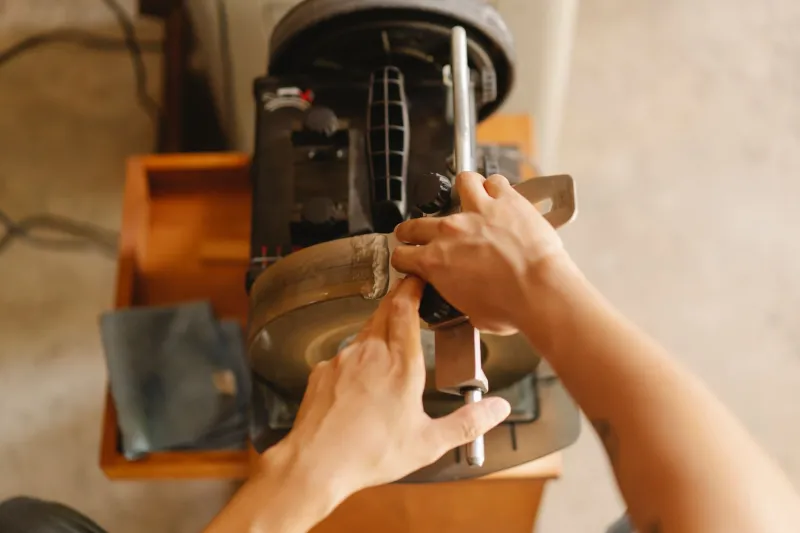
There is a moment in the life of every exceptional piece of fine jewelry when the object ceases to be material and becomes something else entirely. It happens not during the final polish, nor at the moment of setting. It happens earlier — in the quiet, almost imperceptible pause when a master artisan holds a partially formed piece to the light, tilts it slightly, and makes a decision that no specification sheet anticipated. That moment, and everything it contains, is what a machine cannot feel.
In American luxury culture, we have grown accustomed to celebrating technology as progress. And in many respects, it is. Laser welding, computer-aided design, and precision milling have expanded what is geometrically possible in fine jewelry and made certain processes more consistent. But consistency is not the same as excellence. And in the tradition of Japanese jewelry craftsmanship — a tradition built on the concept of shokunin, the artisan who devotes a lifetime to mastering a single discipline — consistency has never been the highest aspiration.
The Limits of the Measurable
Modern fabrication equipment can hold tolerances measured in fractions of a millimeter. It can replicate a form with extraordinary fidelity. What it cannot do is read the material it is working with as a living system — one that responds differently depending on the temperature of the room, the humidity of the season, the particular crystalline structure of a given ingot of gold, or the subtle way a sapphire's inclusions shift its optical center of gravity.
Japanese artisans trained in the classical tradition do not merely execute instructions. They interpret conditions. A goldsmith working in Kyoto or Niigata who has spent twenty years at the bench develops what might be described as a sensory fluency — an ability to receive information from the material through the hands, to adjust pressure, angle, and rhythm in real time in ways that no pre-written program can anticipate. This is not mysticism. It is a form of embodied intelligence, and it produces results that are measurably different from machine-finished work, even when the difference cannot always be articulated in technical terms.
The collector who handles a piece made entirely by hand — truly by hand, not machine-assisted and hand-finished — often senses the distinction before they can name it. There is a warmth to the surface, a coherence to the form, that registers as rightness. It is the physical record of ten thousand micro-decisions made by a human mind in dialogue with living material.
Judgment as the Core Competency
At Anelli Nagaoka, where the design philosophy draws equally from Japanese precision and Italian elegance, the question of human judgment sits at the center of every creative decision. Our collaborating artisans are not selected for speed or volume. They are selected for the quality of their judgment — their capacity to read a design brief, understand its intent, and then make the hundreds of unscripted decisions required to bring that intent into physical form at the highest possible level.
This matters in ways that go beyond aesthetics. When a craftsperson exercises genuine judgment, they are also exercising responsibility. They are the final authority on whether a piece meets the standard it was conceived to meet. That accountability is not transferable to a machine. A milling center does not know when it has made a mistake. A master artisan does — and more importantly, they know what to do about it.
In Japanese craft culture, this accountability is not merely professional. It is ethical. The concept of monozukuri — the art and spirit of making things — encompasses not just technique but the moral seriousness with which the maker approaches their work. To produce something with your hands is to put something of yourself into the world. That is a weight a machine is incapable of bearing.
Why American Collectors Are Paying Attention
Across the United States, a growing segment of fine jewelry collectors has begun to ask different questions when evaluating a purchase. Where previously the conversation centered on carat weight, stone grade, and brand recognition, today's most discerning buyers want to understand the process. Who made this? How was it made? What decisions were made by a human being, and which were delegated to a machine?
This shift reflects a broader evolution in American luxury values — one that prizes authenticity and narrative over mere specification. A ring that can tell the story of the hands that made it, that carries within its surface the evidence of considered human labor, holds a different kind of value than one that emerged from an automated production line, however precise.
This is not anti-technology sentiment. It is a sophisticated recognition that different tools are appropriate for different purposes, and that when the purpose is the creation of an heirloom — a piece intended to carry meaning across generations — the tool that matters most is still the human being.
The Education of the Hand
What separates a shokunin from a skilled technician is not merely years of practice, though practice is essential. It is the quality of attention brought to that practice. Japanese craft training, particularly in the metalworking and jewelry traditions, is structured around the idea that the hand must be educated as thoroughly as the mind — that true mastery requires the development of a physical intelligence that operates below the level of conscious thought.
This is why the finest Japanese artisans speak of their hands as having memory. When a goldsmith reaches for a graver or adjusts the tension of a saw blade, they are not consulting a manual. They are drawing on an accumulated sensory archive of every similar moment they have experienced, every correction they have made, every material they have worked with. That archive is irreplaceable. It cannot be uploaded, replicated, or transferred.
For the collector who understands this, a handmade piece of fine jewelry is not simply an object of beauty. It is a record of a human education — evidence that someone spent years learning to feel what a machine cannot.
The Standard That Endures
Technology will continue to advance. The capabilities of automated fabrication will continue to expand. But the standard against which all fine jewelry is ultimately measured — the standard of the best human hands working at their best — is not a moving target. It has been established over centuries of craft tradition, and it remains the benchmark precisely because it represents something that cannot be engineered away: the full engagement of a trained human consciousness with the material world.
At Anelli Nagaoka, we believe that jewelry made to this standard is not merely more beautiful. It is more honest. It makes no pretense about what it is or how it came to be. Every surface, every joint, every carefully considered proportion is the direct expression of a human judgment freely exercised. That is the quality we seek. That is the quality that lasts.