Earned Beauty: The Case for Jewelry That Carries Its History on Its Surface
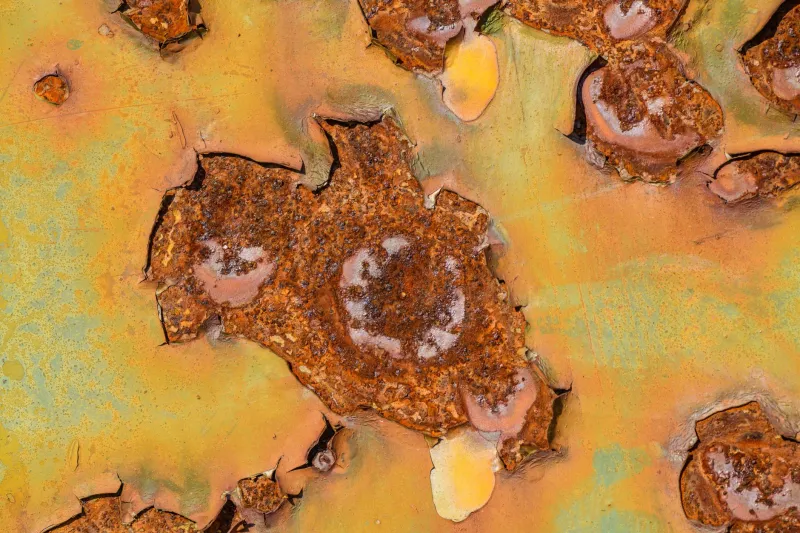
Not long ago, a fine jewelry dealer who presented a piece with visible oxidation on its silver, or a slight softening of its engraved edges from decades of wear, would have offered an apology alongside it. The expectation was clear: fine jewelry should look new, or as close to new as professional polishing could achieve. Evidence of time was evidence of diminished value.
That expectation is changing, and the change is not trivial. Across the American luxury market, a growing cohort of collectors is actively seeking pieces that carry their history on their surfaces — and paying prices that reflect the desirability of that quality rather than discounting for it. Patina, once the thing a jeweler removed before listing a piece, has become the thing that makes certain pieces worth listing at all.
This is a significant shift, and it deserves to be examined with some rigor rather than celebrated uncritically. What is actually driving it? What does it reveal about the evolving psychology of the American luxury collector? And is it, in the end, a more sophisticated relationship with beauty — or simply a new form of fashionable nostalgia?
What Patina Actually Is
Before engaging the cultural argument, a brief material clarification is useful. Patina, in the context of jewelry, refers to the surface changes that occur over time through oxidation, contact with skin and environment, and the gradual smoothing of surface details through wear. On silver, it manifests as a darkening — sometimes a deep, almost smoky gray — in recessed areas, which can dramatically enhance the readability of engraved or repoussé work. On gold, particularly lower-karat alloys, it may produce subtle shifts in surface color. On bronze or copper elements, the transformation can be vivid and complex.
Patina is not damage, though it is frequently confused with it. Damage is structural — a bent prong, a cracked shank, a missing stone. Patina is aesthetic: a record of the object's existence in time. The distinction matters enormously, both for valuation and for the kind of appreciation the collector brings to the piece.
The Counterintuitive Premium
The emergence of patina as a value-adding quality rather than a value-subtracting condition is, from a traditional industry standpoint, genuinely counterintuitive. Fine jewelry has historically been evaluated on standards that reward the appearance of newness: bright polish, crisp edges, surfaces that reflect light with maximum uniformity. These standards made sense within a framework that understood jewelry primarily as a display of material value — the metal and stone at their most visually assertive.
But the collectors now driving premium prices for patinated pieces are operating within a different framework entirely. For them, the surface history of a piece is not evidence of what has been lost; it is evidence of what has been lived. A Georgian mourning ring whose gold has softened at the edges from two centuries of wearing carries information that a newly fabricated replica — however technically perfect — cannot contain. The patina is the proof.
This logic extends beyond antique and estate pieces into a more surprising territory: collectors who are now specifically requesting that new pieces be given the conditions to develop patina naturally, and who are resistant to the reflexive polishing that many jewelers apply as a matter of course before delivery. The piece that arrives looking worn-in, that seems to have already begun its relationship with time, is the piece that certain collectors most want to own.
The Psychological Shift Underneath
What has produced this change in sensibility? Several forces, I would argue, are operating simultaneously.
The first is a broader cultural movement toward authenticity as a luxury value. In a market saturated with flawless surfaces — digital, commercial, aesthetic — visible wear has become a form of credibility. The patinated piece cannot be faked in the same way that a polished piece can. Its surface history is a kind of verification, a record that resists fabrication. For collectors who have grown skeptical of the perfectly presented, the imperfect surface carries a reassurance that perfection no longer can.
The second force is the influence of Japanese aesthetic philosophy, which has found an increasingly receptive audience among American collectors over the past decade. The wabi-sabi tradition, which locates beauty in the transient and the imperfect, offers an intellectual framework within which patina is not merely acceptable but actively beautiful. When that framework is introduced through the context of fine jewelry — particularly through design sensibilities, like those informing Anelli Nagaoka's work, that hold Japanese and Italian traditions in productive tension — it gives collectors a vocabulary for what they are already beginning to feel.
The third force is generational. The collectors now entering their peak acquisition years grew up in an era of vintage and pre-loved markets — in fashion, in furniture, in automobiles. For this cohort, the idea that an object's previous life adds to rather than subtracts from its value is not a counterintuitive proposition. It is simply how they understand objects.
The Industry's Uncomfortable Position
Not everyone in the fine jewelry industry has welcomed this shift with enthusiasm. Professional polishing is a standard service, and the expectation that pieces should be returned to a like-new condition has been built into appraisal systems, insurance valuations, and retail presentation standards for generations. A market that prizes visible age disrupts those systems in ways that are not always comfortable.
There is also a legitimate concern about conflation — the risk that the appetite for patina becomes a cover for the sale of genuinely damaged or poorly maintained pieces at inflated prices. The distinction between a piece whose patina represents authentic surface history and one whose apparent age is the result of neglect or improper storage is not always immediately apparent to collectors who are new to this aesthetic. Reputable dealers have a responsibility to be clear about that distinction, and collectors have a responsibility to ask.
But these concerns, real as they are, should not obscure the genuine intelligence behind the broader shift. The collector who values patina is not being credulous; they are making a sophisticated argument about what constitutes beauty and what constitutes value. They are insisting that the passage of time is not an enemy to be defeated by the polishing wheel, but a collaborator whose contributions deserve respect.
A More Honest Relationship With Time
Fine jewelry has always been, at some level, about time — about marking it, preserving it, passing it forward. The heirloom piece is the quintessential example: an object that gains meaning precisely because it has moved through time and carried its history with it. What the patina premium represents, in this reading, is simply an extension of that logic into the present tense.
The piece that shows its age is already becoming an heirloom. Its surface is already accumulating the kind of meaning that will make it worth inheriting. The collector who chooses that piece over a freshly polished alternative is not choosing imperfection. They are choosing honesty — and, increasingly, they are paying more for the privilege.
That seems, to this observer, like a more sophisticated relationship with beauty than the one it is replacing. Earned beauty, after all, is the only kind that lasts.