Inherited in Silk, Worn in Denim: How American Families Are Reinterpreting Heirloom Jewelry Across Generations
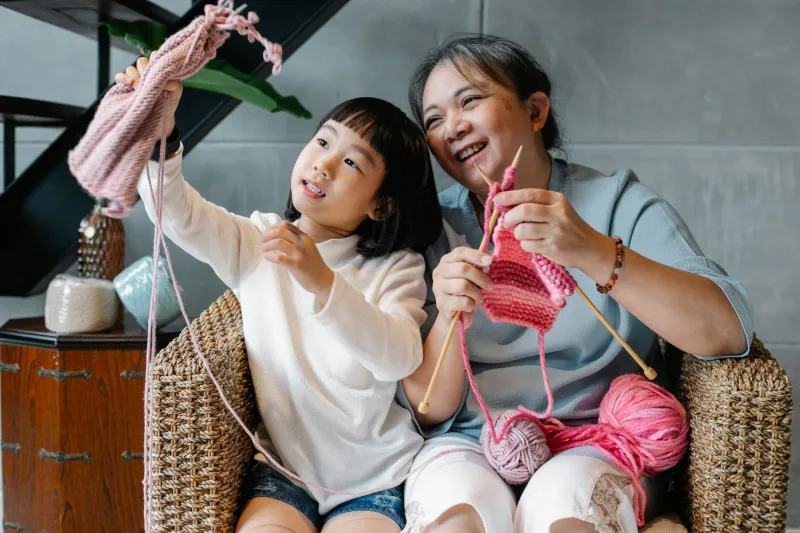
When a grandmother's obi pin arrives wrapped in tissue paper, or a Venetian cameo surfaces from the back of a dresser drawer, the question is rarely whether to keep it—it is how to wear it. Across the United States, collectors with Japanese and Italian heritage are finding sophisticated ways to honor legacy pieces without sacrificing the authenticity of their modern lives. The decisions are both deeply personal and surprisingly practical.
At Anelli Nagaoka, we observe this conversation unfolding in our clients' homes, in the hands of our craftspeople, and across the dining tables where families negotiate the meaning of objects that outlast their original owners. What follows is a considered guide for those standing at that threshold.
The Weight of What Is Given
Heirloom jewelry carries a particular gravity that no newly purchased piece can replicate. In Japanese tradition, objects passed between generations are understood to accumulate ki—a kind of spiritual presence shaped by those who have handled them. In Italian custom, family jewels are less a financial asset than a narrative, a compressed autobiography worn at the throat or wrist. When these two traditions converge in an American household, the resulting inheritance can feel both precious and paralyzing.
The paralysis is understandable. A piece designed for formal kimono presentation does not obviously translate to a Tuesday morning in Chicago. A heavy gold brooch from Palermo, magnificent against black velvet, can seem impossible against a linen blazer. Yet the instinct to preserve these objects untouched—sealed in velvet boxes, visited only on anniversaries—does a disservice to their makers and their original wearers, who chose jewelry precisely because it was meant to be seen.
The more generous interpretation of stewardship is active engagement: wearing, adapting, and occasionally transforming, while remaining conscious of what is being honored.
Remounting Without Erasure
The most common practical intervention is remounting—extracting a significant stone or element from its original setting and placing it into a new one. Done thoughtfully, remounting is not destruction. It is translation.
The critical distinction lies in what is preserved. A Japanese artisan's hand-engraved shank, a maker's mark from a Florentine goldsmith, a particular alloy formula unique to a specific decade—these carry historical information that deserves careful documentation before any modification. We recommend commissioning a detailed photographic and written record of every inherited piece prior to any workshop visit. This archive becomes part of the jewelry's ongoing provenance, a layer added rather than subtracted.
When selecting a new setting for a remounted stone, consider the silhouette language of the original piece. A stone originally set in the clean geometric forms of Meiji-era metalwork will feel most coherent in a contemporary setting that respects that lineage—perhaps a minimal bezel with subtle hand-finishing—rather than one that imposes an entirely foreign aesthetic vocabulary. Conversely, a deep-cut coral from a Neapolitan necklace may welcome a more architectural setting that gives it modern proportion without diminishing its Mediterranean warmth.
The goal is continuity of character, not continuity of form.
Mixing Eras Without Apology
Beyond remounting, the more accessible practice is simply wearing vintage and contemporary pieces together—and doing so with the confidence that comes from intentional curation rather than accident.
Japanese aesthetic principles offer a useful framework here. The concept of ma—the considered use of negative space—translates directly to jewelry composition. A single inherited piece, worn as the deliberate focal point against an otherwise unadorned neckline, commands more attention and respect than it would if crowded by competing elements. The restraint is itself a form of honor.
Italian sensibility, by contrast, embraces layering as a form of autobiography. A Roman woman might stack a grandmother's gold chain with a contemporary Milanese link piece and a simple cord pendant acquired on a recent trip—each object representing a chapter, the combination representing a life in progress. This approach works equally well for American collectors who have accumulated pieces across relationships, travels, and milestones.
The practical rule: when mixing eras, choose one point of harmony—metal tone, stone color, or scale—and allow everything else to vary. A consistent warm gold tone, for instance, can unite a 1940s Japanese shakudo piece with a contemporary Italian vermeil ring without forcing them to pretend they belong to the same period.
The Conversation Before the Workshop
Perhaps the most underappreciated step in adapting an inherited piece is the family conversation that should precede any craftsperson's involvement. Siblings, parents, and extended family members may hold memories, stories, or claims attached to a piece that the current holder is unaware of. A brooch that appears purely decorative may have been worn at a funeral, a wedding, or a moment of private significance that reshapes how it should be treated.
In Japanese family culture, decisions about significant objects are often made collectively, with deference to elders and attention to unspoken dynamics. In Italian-American households, the negotiation may be more explicit—and occasionally more spirited. Either way, the conversation is worth having before any irreversible step is taken.
Where consensus proves elusive, documentation and delay are preferable to division. A piece held in trust, with its history carefully recorded, retains its integrity. A piece modified amid family conflict carries that friction forward.
Living Authentically With What Was Left Behind
The ultimate question is not whether to adapt an inherited piece, but whether the adaptation serves both the living wearer and the memory of those who came before. These are not mutually exclusive obligations.
A second-generation collector who remounts her grandmother's pearl into a ring she wears daily is not diminishing the original. She is completing it—extending its life, expanding its story, and ensuring that the craftsmanship and sentiment embedded in that pearl continue to move through the world rather than resting in a drawer.
At Anelli Nagaoka, we believe that the most respectful approach to inheritance is full engagement: learning the piece's history, understanding its construction, consulting skilled craftspeople who honor both Japanese precision and Italian artistry, and ultimately making the decision that allows the object to remain alive in the world it now inhabits.
Generations do not diminish jewelry. They deepen it.