The New Luxury Vocabulary: How American Collectors Found Sophistication in Silence
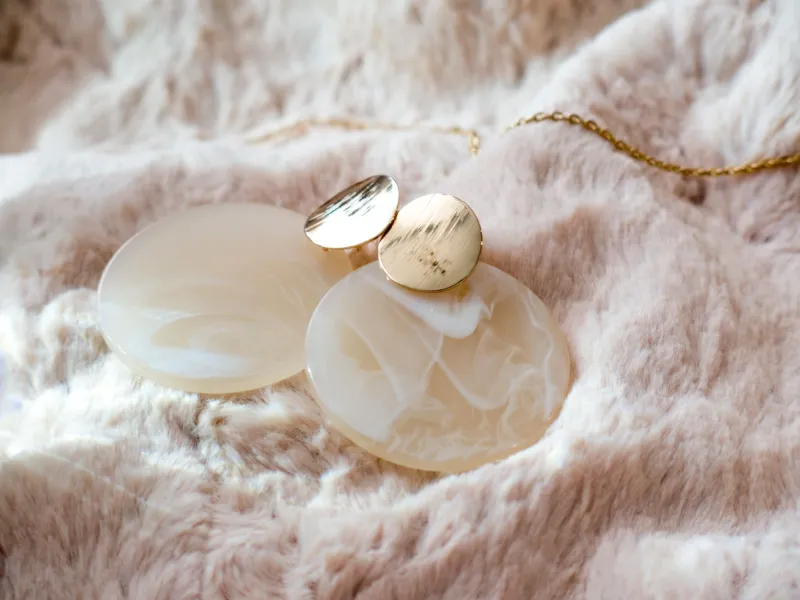
Across America's most discerning collecting circles, a quiet revolution is underway. The language of luxury is being rewritten—not in the bold grammar of maximum carats and conspicuous stones, but in the measured syntax of negative space, restrained form, and deliberate absence. For a growing number of affluent American consumers, the most powerful thing a jewel can do is hold back.
This is not austerity. This is not minimalism in the stripped-back, trend-driven sense that interior design magazines have cycled through for decades. What is emerging among serious collectors is something far more considered: a genuine philosophical alignment with Japanese design sensibility, one that prizes the eloquence of what remains unsaid over the spectacle of what is displayed.
The Shift That Numbers Cannot Fully Explain
Spend any time with jewelry advisors serving high-net-worth clients in New York, San Francisco, or Chicago, and a pattern surfaces with striking consistency. Clients who once arrived with images of statement pieces—chandelier earrings, stacked rings, layered diamond pavé—are increasingly arriving with something else entirely: a mood, a feeling, a preference for pieces that reward close attention rather than demand it from across the room.
One independent jewelry consultant based in Manhattan, who has advised collectors for over two decades, describes the change plainly: her clients no longer want to be read at a distance. They want to be discovered up close. That distinction, modest as it sounds, represents a seismic shift in how American luxury consumers understand the relationship between an object and its audience.
The data, where it exists, supports the anecdote. Auction houses and private dealers alike have noted sustained interest in works by Japanese and Japanese-influenced designers—pieces where the metalwork itself is the statement, where the setting is as intentional as the stone, and where the overall effect is one of composed restraint rather than accumulated opulence.
Wabi-Sabi Meets the American Wardrobe
To understand what is driving this preference, one must reckon honestly with wabi-sabi—the Japanese aesthetic philosophy that finds beauty in impermanence, asymmetry, and incompleteness. For Western consumers, the concept can initially feel abstract, even counterintuitive. We are trained, culturally and commercially, to equate value with finish, with polish, with the flawless.
Yet something in the philosophy has taken root in American collecting culture with remarkable tenacity. Cultural critics who study the intersection of design and identity point to a broader exhaustion with excess—a post-pandemic recalibration of what conspicuous consumption actually communicates. Where a heavily embellished piece once signaled arrival, it now risks signaling anxiety. The collector who wears a single, precisely crafted Japanese gold band—its surface bearing the faintest trace of hand-finishing, its proportions arrived at through decades of refined judgment—communicates something altogether different: confidence so settled it requires no amplification.
This is the geography of desire that has quietly redrawn itself. The destination is no longer the maximalist summit. It is something more interior, more earned.
What 'Less' Actually Costs
It would be a mistake to conflate Japanese minimalist jewelry with accessible pricing. The economics, in fact, work in the opposite direction. A piece that achieves its effect through restraint demands more from its maker, not less. Every millimeter of a clean surface is exposed to scrutiny. There is nowhere for imprecision to hide. The negative space that defines the aesthetic is itself a kind of material—one that requires mastery to deploy convincingly.
American collectors who have made this transition are often frank about what surprised them most: the price per gram of precious metal can be considerably higher for a minimalist Japanese-influenced piece than for a heavily set Western counterpart. What they are paying for is not weight or stone count. They are paying for judgment—the designer's judgment about what to leave out, and the craftsperson's judgment about how to execute that vision with absolute fidelity.
For collectors who have spent years in more conventional luxury markets, this represents a genuine reorientation. Value, in this new vocabulary, is measured in decisions, not in volume.
The Italian Counterpoint
At Anelli Nagaoka, we have long held that Japanese precision and Italian elegance are not opposing forces but complementary ones—two traditions that, when placed in genuine conversation, produce something neither could achieve independently. The Italian design tradition, with its embrace of sensuality, proportion, and material pleasure, provides exactly the counterweight that prevents Japanese restraint from tipping into severity.
What American collectors are discovering, often through that very tension, is that the most enduring pieces occupy a space between the two philosophies. They have the considered silence of Japanese craft and the warm, inhabitable quality of Italian form. They do not shout. But neither do they disappear.
This is, perhaps, the most honest definition of the new luxury: a piece that earns its place on the body through intelligence rather than insistence, and that grows more interesting—not less—the longer one lives with it.
The Collector as Curator
What is most striking about this cultural shift is what it implies about the collector's own self-conception. To choose restraint in a market that still defaults to maximalism is to make an active, deliberate statement. It requires a degree of confidence that is, in its own way, the most luxurious quality of all.
Collectors who have made this transition frequently describe the experience in curatorial terms. They are not simply acquiring jewelry; they are editing an aesthetic position. Each piece must justify its presence not through spectacle but through contribution—to the wardrobe, to the collection, to a coherent vision of who the wearer is and what they value.
In that sense, the geography of desire has not simply shifted toward Japan. It has shifted inward. The most coveted destination, it turns out, is a kind of clarity—and the jewels that get you there are the ones that know precisely when to stop.