What the Secondary Market Reveals About the True Value of Fine Jewelry
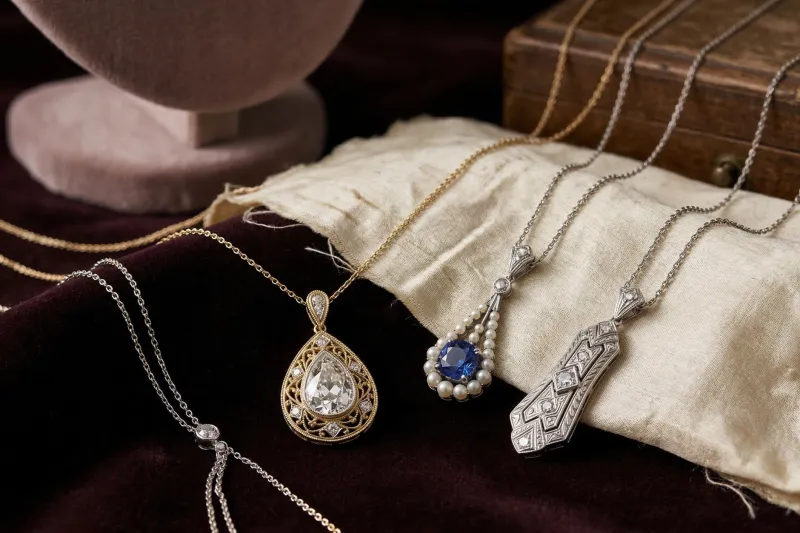
For decades, the secondary market for fine jewelry was viewed by many American collectors as a destination of last resort — a place to liquidate, not to learn. That perception has changed dramatically. Today, the resale ecosystem for fine jewelry functions as one of the most transparent and instructive indicators of genuine value in the luxury world. What pieces trade for on the secondary market, how quickly they move, and who is buying them tells a story that no retail price tag can fully convey.
The Secondary Market as Truth-Teller
Retail pricing in the luxury sector is, by design, a controlled environment. Brands set prices according to positioning strategies, distribution exclusivity, and marketing investment. These factors are legitimate components of value, but they are not the whole story. The secondary market, by contrast, is governed by a far less forgiving calculus: what a knowledgeable buyer will actually pay, without the influence of a flagship boutique's atmosphere or a sales associate's narrative.
This makes secondary market data uniquely valuable for collectors seeking to understand what endures. A piece that was purchased at a premium retail price and subsequently commands strong resale value has passed a test that no amount of advertising can replicate. It has been judged, independently and repeatedly, as worthy of continued ownership — and that judgment reflects something real about the object's intrinsic quality, aesthetic staying power, and cultural resonance.
What Holds Value — and Why
Across the American secondary market for fine jewelry, certain consistent patterns have emerged that reveal the underlying drivers of lasting value.
Craftsmanship Over Trend
Pieces that prioritize exceptional craftsmanship over seasonal aesthetic trends consistently outperform in resale. A hand-engraved platinum setting executed with Japanese precision does not become less beautiful because a particular silhouette has fallen out of fashion. The quality of the work is self-evident and self-sustaining. Collectors who have spent years observing the secondary market will confirm that technically superior pieces — those where the setting, the finish, and the stone selection all reflect uncompromising standards — hold their value with remarkable consistency.
This is why the design philosophy at Anelli Nagaoka places such emphasis on the integrity of construction. A piece built to last generations will be valued by generations, and the secondary market reflects this with admirable clarity.
Provenance and Documented History
Fine jewelry with traceable provenance commands a measurable premium in the secondary market. This is not merely a function of authentication — though certification is, of course, essential. It is a function of narrative. American collectors have become increasingly sophisticated in their appreciation for objects with documented histories, recognizing that the story of a piece is inseparable from its value.
A brooch worn at a significant cultural moment, a ring that passed through three generations of a single family, a bracelet acquired from a distinguished private collection — these objects carry accumulated meaning that the secondary market prices accordingly. Sellers who can document the journey of a piece will consistently achieve stronger results than those offering comparable items without context.
Design Integrity and Timelessness
The secondary market is particularly unforgiving of pieces whose design was primarily a product of their moment. Jewelry that was purchased because it reflected a passing trend — an aesthetic that felt urgent at the time of acquisition but has since dated — rarely performs well at resale. Conversely, pieces whose design reflects a deeper, more considered aesthetic vision tend to appreciate in the eyes of subsequent buyers.
This distinction maps closely onto the difference between fashion and style — a distinction that serious collectors understand intuitively. Fashion is cyclical and perishable. Style is cumulative and enduring. The secondary market, over time, separates the two with considerable precision.
Reading the Market as a Collector
For the discerning collector building or refining a fine jewelry archive, secondary market observation is an invaluable practice — not because it should dictate acquisition decisions, but because it provides context that retail environments cannot.
Monitoring which pieces from which ateliers achieve strong secondary results reveals something about the broader collector community's values. It identifies the craftspeople whose work is sought rather than merely sold, the design traditions that continue to resonate across generations, and the material standards that the market has decided are non-negotiable.
In the American context specifically, the secondary market has become a site of genuine connoisseurship. Platforms that once catered primarily to buyers seeking accessible price points have increasingly attracted sophisticated collectors who use resale channels not for economy but for access — to pieces that are no longer in production, to vintage work by celebrated ateliers, and to objects whose original owners understood value in ways that have since been validated by time.
The Relationship Between Primary and Secondary Value
Perhaps the most important insight the secondary market offers is this: the gap between retail price and resale value is a measure of authenticity. Pieces that were priced primarily on brand prestige and marketing investment tend to lose significant value the moment they leave the boutique. Pieces that were priced on the integrity of their materials, the excellence of their craft, and the depth of their design tend to hold — and in many cases, appreciate.
For collectors at Anelli Nagaoka, this principle is foundational. Every acquisition should be made with the understanding that genuine value is not conferred by a price tag. It is revealed, over time, by what the market — the honest, unadorned secondary market — is willing to pay.
A More Honest Appraisal
The secondary market for fine jewelry is not simply a resale channel. It is a living archive of collective judgment, continuously updated by buyers and sellers who have moved beyond the theater of retail and into the more demanding territory of genuine valuation. For those who know how to read it, it offers something rare in the luxury world: the truth about what endures.